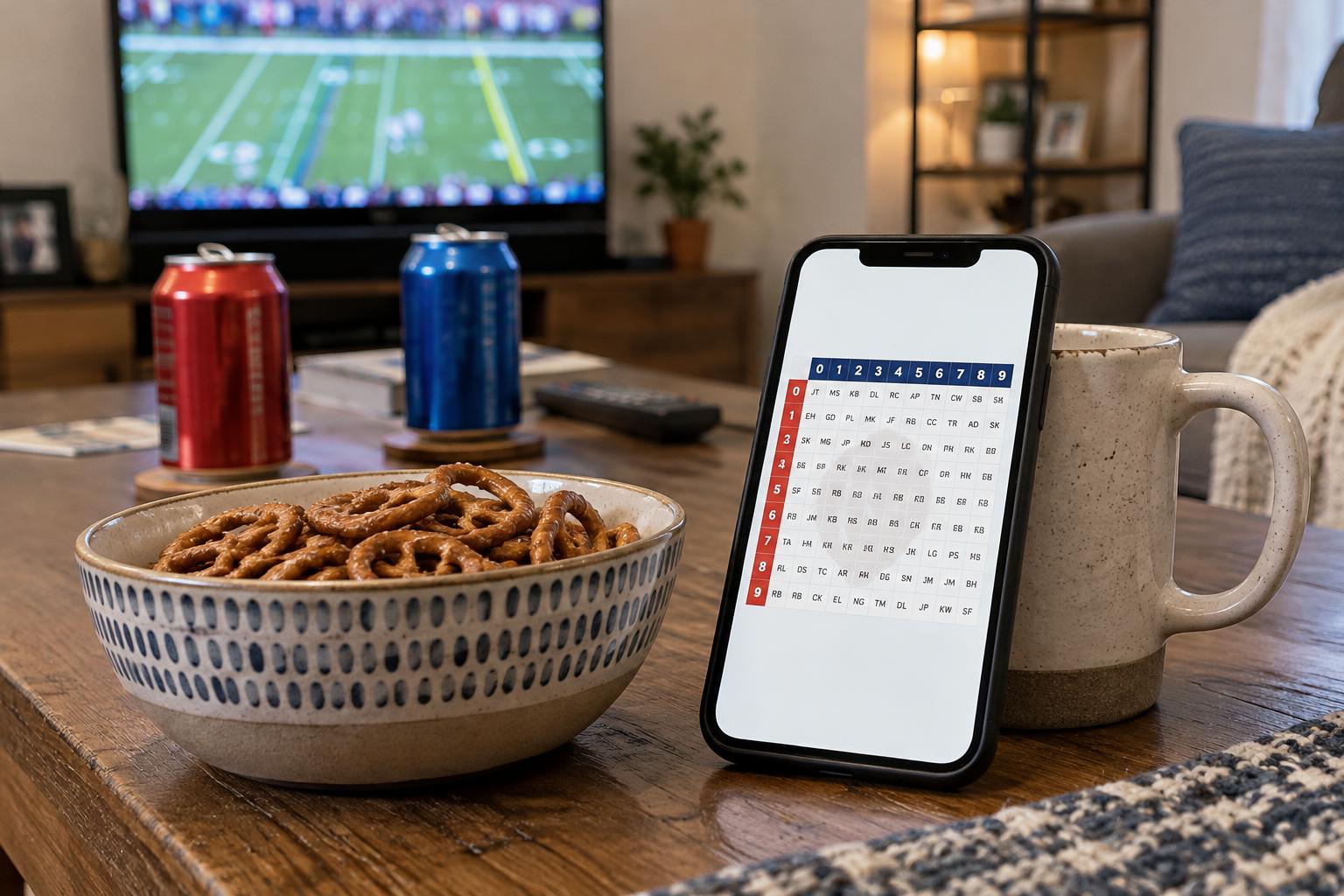
A squares board lives or dies on whether people actually watch the game. You can run a perfectly fair board for a Thursday night snoozer between two 2-win teams and watch half the squares go unclaimed, because nobody in your group cares enough to text back. Run the same board for a game everyone already has circled on the calendar, and it fills itself.
So the real question isn't how to set up a board, it's which game to build one around. The best NFL games for squares aren't random: the NFL schedule hands you a few obvious winners every season, plus a handful of sneaky-good ones that people sleep on. Here's where I'd put my ten squares.
Thanksgiving is the easiest win on the calendar
If you only run one football squares board all year, make it Thanksgiving. Everyone is already together, there's a TV on, and half your relatives have an opinion about the game they can't do anything with. A board gives Aunt Carol a reason to glance at the score every quarter.
The 2026 slate is loaded. You get Bears at Lions at 1 p.m. ET, Eagles at Cowboys in the late afternoon window, and Chiefs at Bills under the lights on NBC. The league even added a Thanksgiving Eve game this year, Packers at Rams on Netflix the night before. Three or four nationally televised games in two days means you can run a board for whichever one your table cares about most, and the Cowboys afternoon game is usually the one with the loudest arguments.
Thanksgiving boards are the whole reason a lot of families try squares in the first place. If that's your angle, we wrote a whole piece on running one that keeps the kids involved: football squares for family game night.
Primetime games carry themselves
Sunday Night Football, Monday Night Football, the standalone Thursday opener. These games are built for a board because the whole country is watching the same thing at the same time. There's no competing window pulling attention away, and the broadcast spends the whole night reminding people of the score.
Primetime also tends to get the better matchups. The league schedules its marquee divisional and rematch games in those slots on purpose. A board for a random 1 p.m. regional broadcast asks people to care about a game they might not even have access to. A board for Sunday night asks them to care about the game that's already on.
One caution: the best primetime games sometimes turn into blowouts, and a blowout kills the late-quarter drama. That's fine for squares, actually. The beauty of the format is that the first-quarter and halftime scores still crown a winning square even when the fourth quarter is garbage time. Four separate quarters means four separate moments where someone at your party yells.
Division rivalries fill fast for a different reason
Bills-Dolphins, Cowboys-Eagles, Packers-Bears, Chiefs-Raiders. These games bring out people who don't normally care about squares, because they already have a dog in the fight. You'll get both sides of the rivalry fired up, and the trash talk writes itself.
The scores in rivalry games also tend to be messier and lower-scoring than you'd expect, which is good news for squares. Tight defensive battles produce more of the odd digits (the 2s, 5s, and 8s) that would otherwise feel like dead squares. The common wisdom that 0, 3, and 7 win everything holds up over a full season, but a grind-it-out division game is exactly where the weird numbers earn their keep. If you want the full breakdown of which digits actually matter, that's in our football squares strategy guide.
The Super Bowl is its own animal
I'm separating this out because it barely counts as the same activity. The Super Bowl is the single biggest squares day of the year by a mile, and a board for it is full before you've even finished setting it up. You don't need to sell anyone. You need to not run out of squares.
The thing about the Super Bowl is that you can go bigger. A standard 10x10 grid has 100 squares, and a Super Bowl party often has enough people to claim every one. For a regular-season game you might only fill half a grid, which is totally fine, but the big game is the one time of year you'll actually want the full hundred. If you've never run one start to finish, the guide to running a board walks through the whole thing.
The games I'd skip
Not every game is worth the setup. Preseason is a hard no. The scores are random, the starters play two series, and nobody believes the result means anything. Early-season Thursday games between non-contenders are a tough sell too, because the audience just isn't there.
I'd also think twice about a board for a game where your group is lopsided, like a bunch of Chiefs fans watching the Chiefs blow out a bad team. Squares works best when nobody at the party already knows how it's going to end. A little uncertainty is the point.
What actually makes a game "good" for squares
Strip away the specifics and it comes down to three things, roughly. People need to be watching. The score needs to move. And the group needs a reason to check in at the end of each quarter instead of just the final.
That last one is underrated. Squares crowns a winning square four times, once per quarter, which means a board stays alive even in a game that's decided early. A regular-season game you'd normally tune out at halftime suddenly has a reason to stay on, because someone's square is riding on the halftime number. That's the quiet magic of the format, and it's why squares survives in groups that gave up on fantasy years ago. We got into that whole debate in squares vs fantasy.
Best NFL Games for Squares FAQ
What's the single best NFL game to run squares for?
The Super Bowl, no contest, because the audience is guaranteed and the board practically fills on its own. If you want a close second during the regular season, the Thanksgiving games are hard to beat since the whole family is already in one room with a game on.
Do I need a close game for squares to be fun?
No. Because squares crowns a winning square every quarter, a blowout still produces three or four separate winning moments. The game being competitive helps, but it isn't required for the board to deliver.
Can I run a squares board for any NFL game?
Yes. A squares board works for any game that has a score, so any NFL matchup qualifies. The question is whether enough people in your group will actually watch and claim squares, which is why the marquee games are the safe bet.
How many squares should I put up for a regular-season game?
As many as you can fill. A 100-square grid is standard, but there's nothing wrong with running a half-filled board for a smaller crowd. Fewer squares in play just means fewer names on the grid, and the game plays out exactly the same.
Are the winning numbers different for different games?
Across every NFL game, 0, 3, and 7 come up most often because of how scoring works. Low-scoring defensive games give the oddball numbers (2, 5, 8) a better-than-usual shot, but the digits themselves are assigned randomly, so you can't pick a "better" game to improve your own square.
When should I set up the board?
A few days ahead for a big game so people have time to claim squares, and the morning of is usually fine for a casual regular-season board. The one rule: numbers get assigned only after every square is claimed, never before.
Pick your game, build the board
Grab the matchup your group already cares about and have a board ready in under a minute. Free, no app, no math on your end.
Create Free Board →